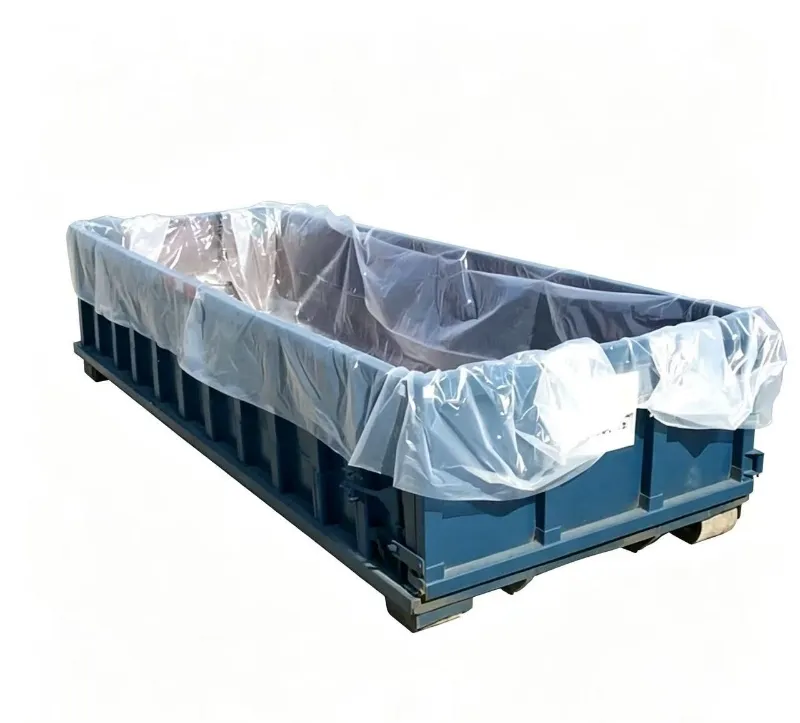
If you’re in the waste management or demolition business, you know that a tarp isn’t just a "cover"—it’s a legal requirement and a safety shield. At 65 mph on a gusty highway, a cheap tarp transforms from a protective layer into a shredded liability.
We’ve seen what happens when "standard" tarps meet the brutal reality of roll-off operations. That’s why we don't build general-purpose covers; we build highway-hardened containment systems.
The "Silent" Profit Killers in Waste Transport
Most fleet managers look at tarp costs as a line item. But the real costs are hidden in the friction of daily operations:
- The "Flap & Tear" Effect: Low-density tarps fatigue quickly under constant wind oscillation. Once a micro-tear starts, the wind does the rest, leading to debris spills and costly DOT fines.
- Grommet Failure: When your crew cinches down a tarp to secure a load of jagged rebar, the tension is immense. If the eyelets aren't reinforced, they pull out, leaving you with a loose, dangerous flapping mess.
- The Replacement Cycle: Buying a cheap tarp three times a year is always more expensive than buying a professional-grade tarp once.
What Makes a Tarp "Roll-Off Ready"?
We’ve engineered our roll-off dumpster tarps to handle the specific mechanical stresses of construction and demolition transport.
1. Superior Material Choice: PE vs. PVC
- Heavy-Duty PE: Our high-density woven Polyethylene is the go-to for contractors who need a lightweight, waterproof, and extremely cost-effective solution for everyday hauls.
- Premium PVC: For the most aggressive environments—think jagged demolition metal or heavy sludge—our PVC-coated fabric offers unmatched puncture resistance and remains flexible even in sub-zero winter temperatures.
2. The "Armored" Edge
A tarp is only as strong as its perimeter. We don't just hem our edges; we reinforce them with high-tensile internal webbing. This "skeleton" allows the tarp to absorb the shock of wind gusts without transferring all that stress to the fabric weave.
3. Industrial-Strength Eyelets
Our grommets aren't just pressed in; they are seated into multi-layer reinforced patches. They are spaced precisely to ensure that when you apply tension, the load is distributed evenly across the entire structure, preventing localized tearing.
Technical Specifications at a Glance
| | TarpManufacture Advantage |
|---|
| | High-Denier PE / Scrim-Reinforced PVC |
| | 4-Layer Heat-Sealed Hem with Internal Bolt Rope |
| | Multi-Layer Patch Reinforcement |
| | Deep-Polymer UV Inhibitors |
| | Custom Specs for 10-40 Yard Containers |
Real-World Value: Keeping Your Fleet on the Move
One of our clients, a large-scale demolition firm, was replacing their roll-off tarps every 60 days due to edge fraying. We switched them to our webbing-reinforced PVC series. Six months later, those same tarps are still in service. They didn't just save money on the hardware; they eliminated the labor hours spent wrestling with torn covers at the job site and wiped out their "debris-spill" liability risks.
Stop Covering. Start Containing.
In the world of waste transport, reliability is your greatest asset. Don't let a sub-par tarp lead to a DOT inspection or a damaged reputation.
Tell us your container dimensions and the typical debris you haul. We’ll help you select the right GSM and reinforcement package to ensure your loads stay exactly where they belong: inside the dumpster.