
News Waterproof TarpsTarp ComparisonTarp Buying GuideTarp Problems
2026年4月25日
PE vs PVC Tarpaulin: Why Choosing the Wrong One Hurts More Than a Bad Breakup (The Hardcore Buyer's Guide)
PE vs PVC Tarpaulin: Why Choosing the Wrong One Hurts More Than a Bad Breakup (The Hardcore Buyer's Guide)
You know that sinking feeling when you realize you’ve committed to the wrong person? Yeah, buying the wrong industrial tarp for your business feels exactly like that. Only instead of taking half your stuff, it ruins a $50,000 shipment of lumber and leaves you with angry clients and a massive headache.
Every week, I get frantic calls from buyers who messed up. Either they bought a massive, ultra-expensive cover that’s so heavy their crew can't even lift it, or they bought a cheap, lightweight sheet for a brutal industrial job and watched it shred into confetti on the highway.
Choosing between a
PE vs PVC tarpaulin isn't just about picking a fabric; it's about matching the right weapon to the right war. Pick the wrong one, and the buyer's remorse will keep you up at night.Let’s strip away the confusing factory jargon. No fluff, no "we provide excellent quality" BS. Here is your hardcore, real-world survival guide to making the right choice without bleeding cash.
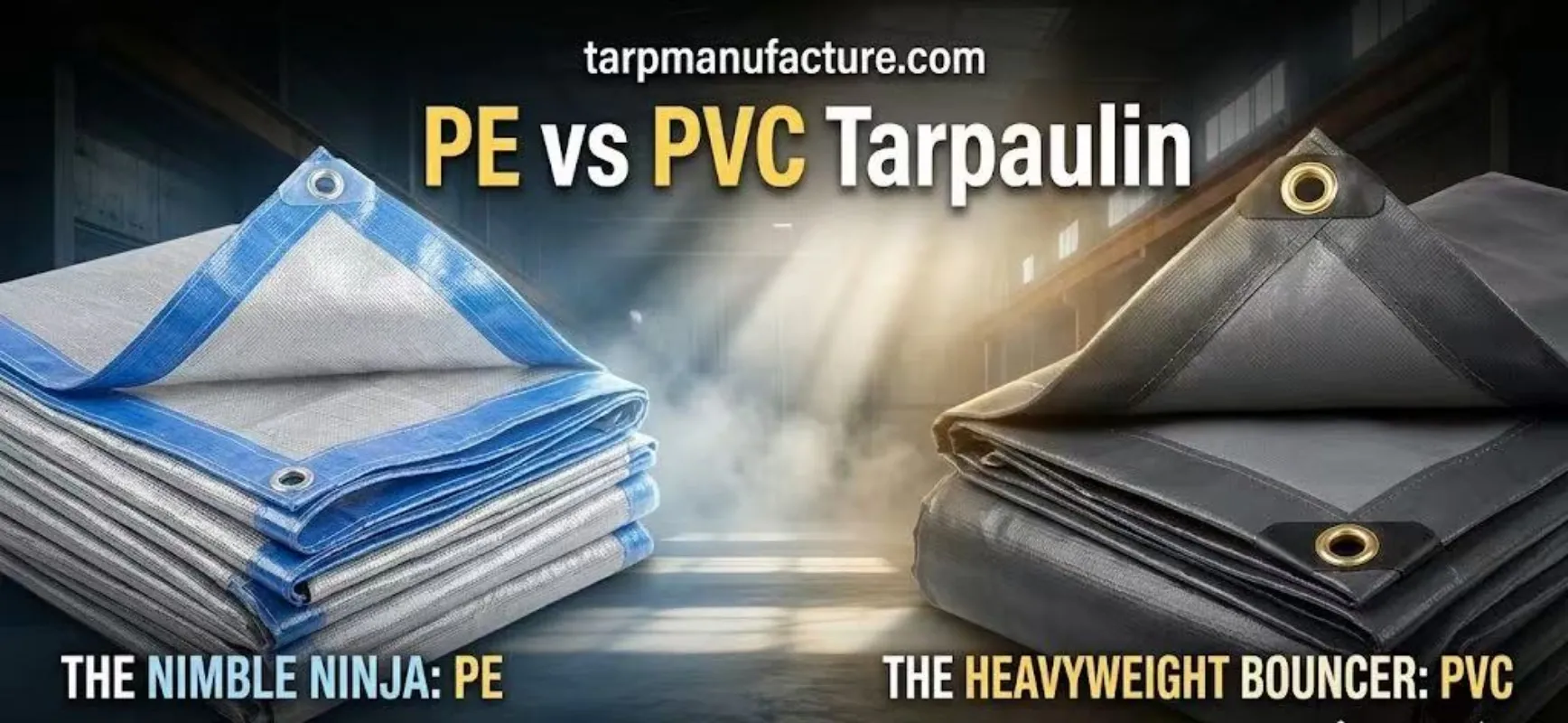
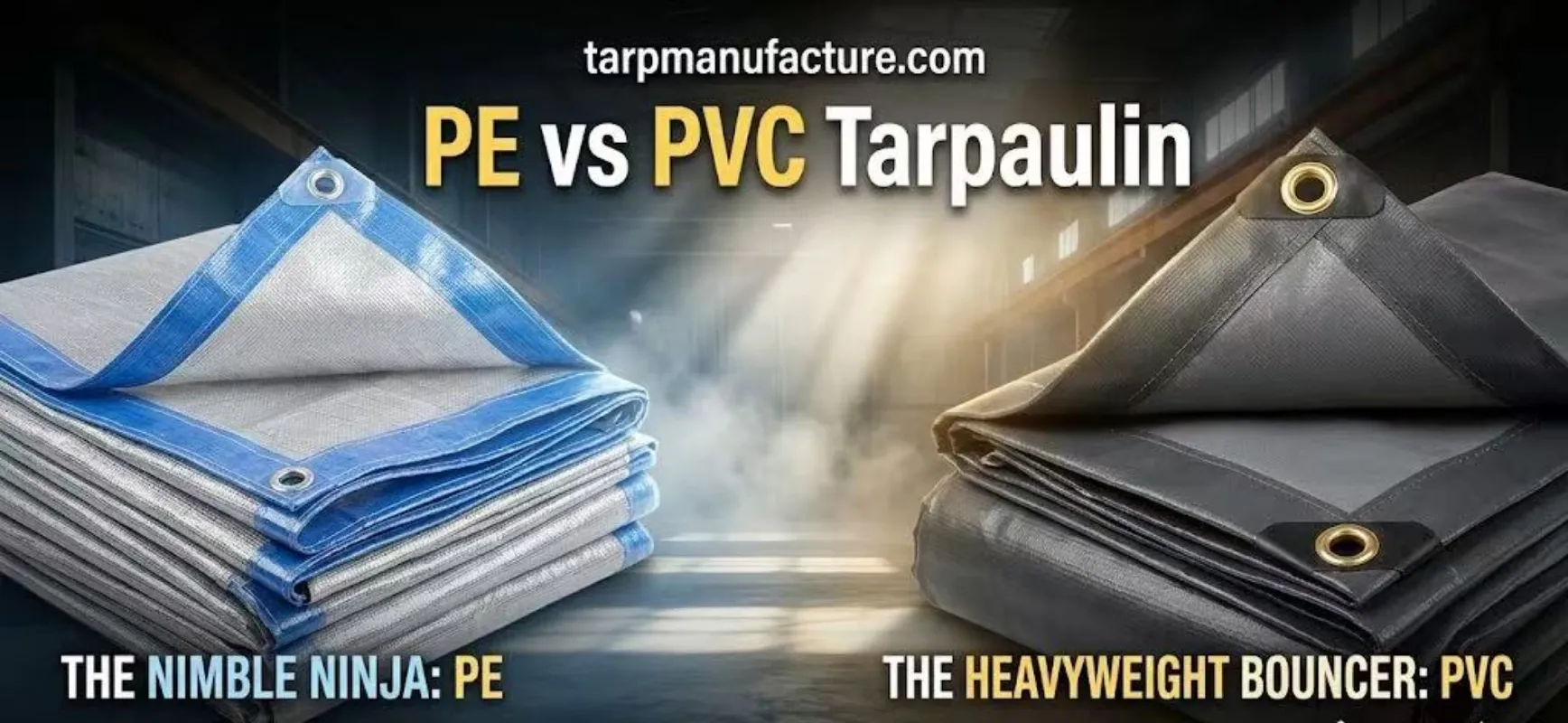
Meet the Contenders: The "Nimble Ninja" vs. The "Heavyweight Bouncer"
To understand what you need, you have to understand who these guys are. Let’s give them some personalities.
1. PE Tarpaulin (Polyethylene): The Nimble Ninja
Think of the PE tarp as your highly capable, everyday problem solver.
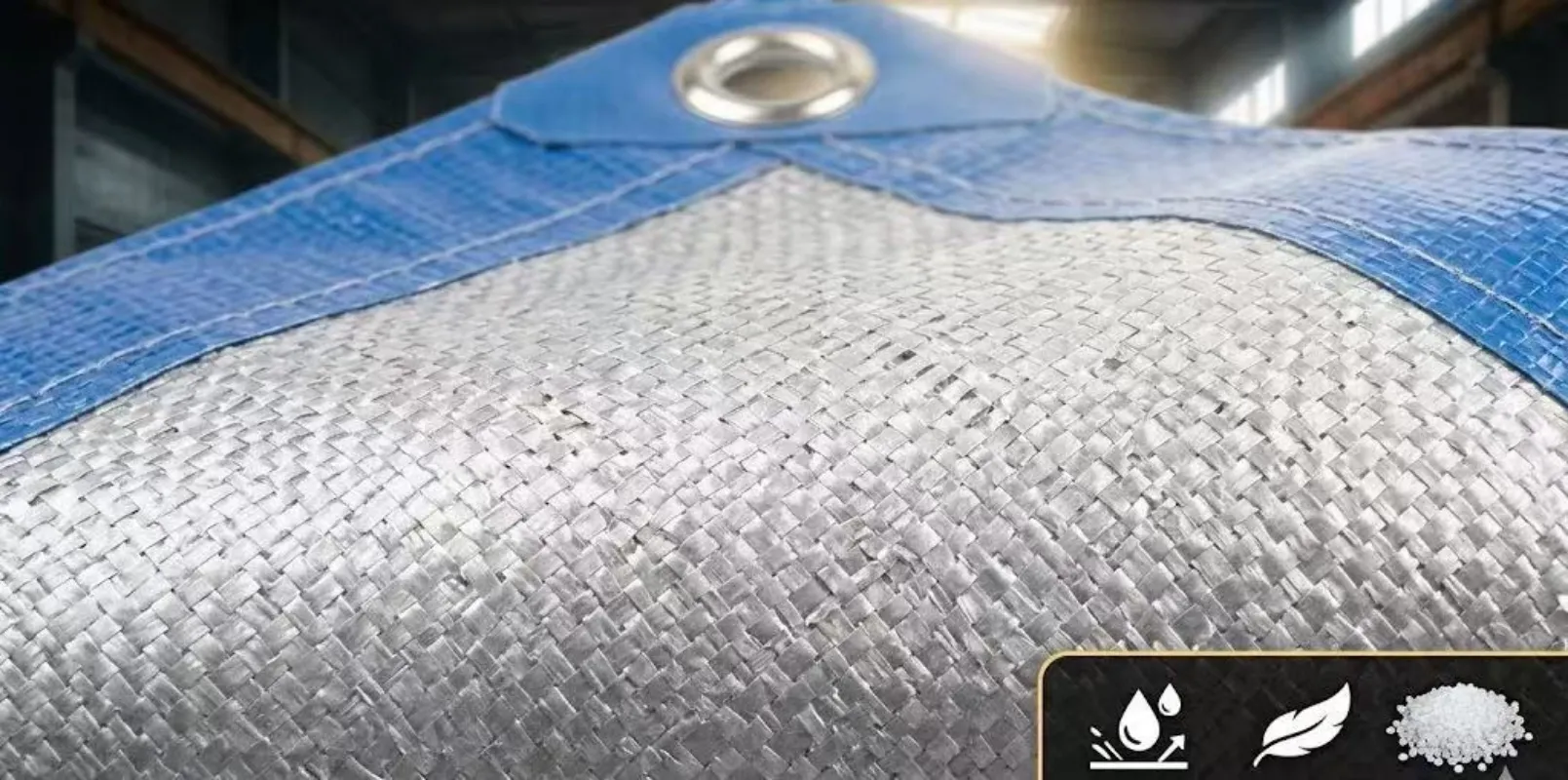
- How it's made: It’s made by weaving flat plastic strips together (like a high-tech basket) and then heat-coating both sides with a waterproof layer.
- The Vibe: It’s incredibly lightweight, completely waterproof, affordable, and flexible. You can fold a massive 40x40 ft PE tarp and throw it in the back of your pickup.
- The Catch: It’s tough, but it’s not immortal. Under constant, brutal friction or years of non-stop highway wind flapping, it will eventually retire.
-
2. PVC Tarpaulin (Polyvinyl Chloride): The Heavyweight Bouncer
If PE is a ninja, PVC is a 300-pound bouncer with a bad attitude.
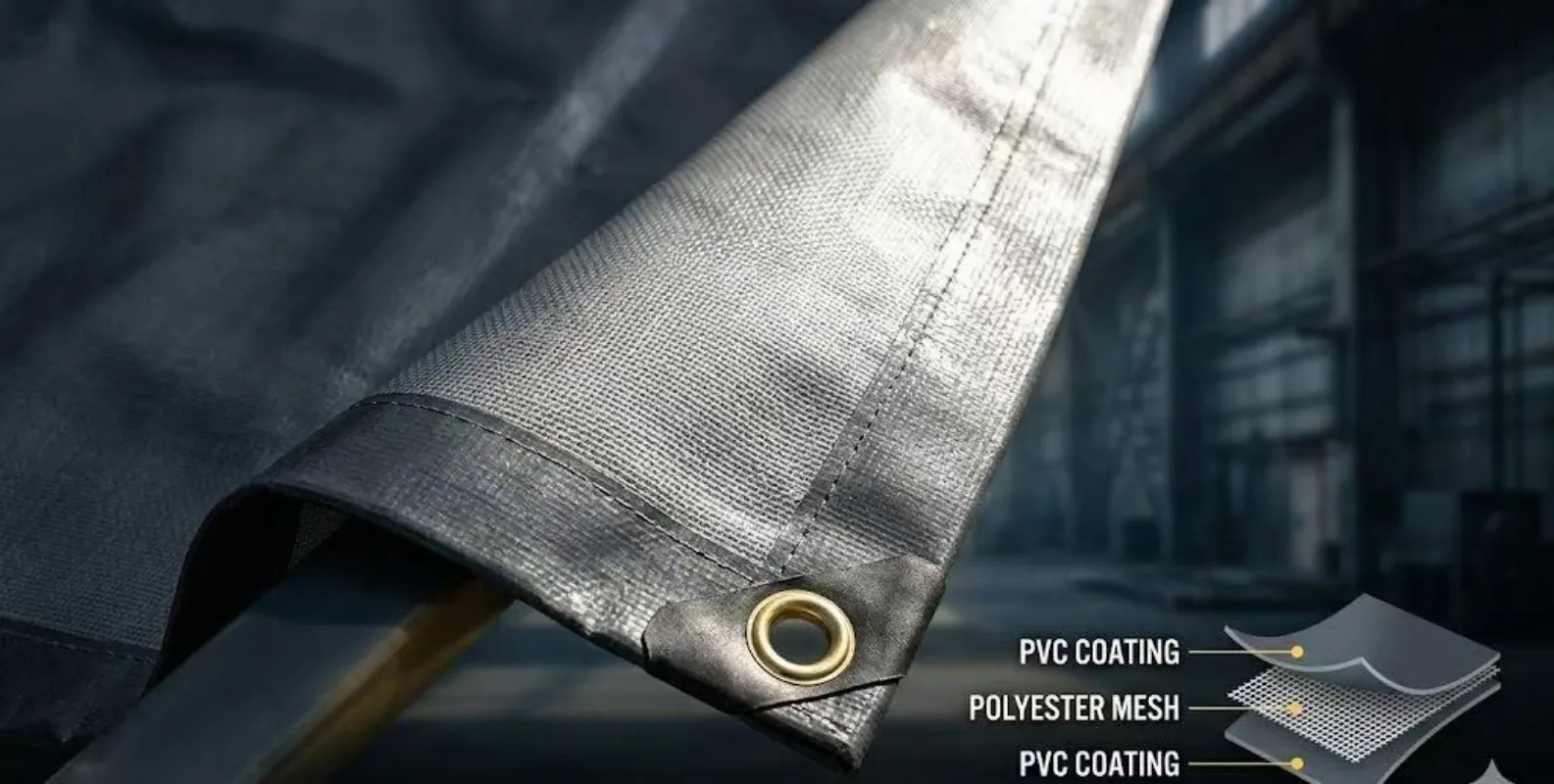
- How it's made: It starts with a thick, high-strength polyester mesh that is literally dunked into liquid vinyl (PVC) and baked.
- The Vibe: It is ridiculously heavy, thick, rubbery, and virtually indestructible. It laughs at jagged steel, resists chemicals, and can last for a decade.
- The Catch: It’s expensive. And it is heavy. If you try to drag a giant PVC tarp onto a roof by yourself, you will probably blow out a spinal disc.
The Real-World Match-Up: Don't Bring a Tank to a Knife Fight
Still confused? Let’s look at how our clients actually use these things. Match your scenario, and you won't get burned.
Scenario A: The Emergency Roof Leak & Backyard Heroics
- The Mission: Your warehouse roof is leaking, or you need to cover a massive pile of fertilizer, or you want to protect patio furniture for the winter.
- The Mistake: Buying a heavy-duty PVC tarp. Why? Because dragging a 100-pound piece of rubberized vinyl up a ladder in the rain is a death wish.
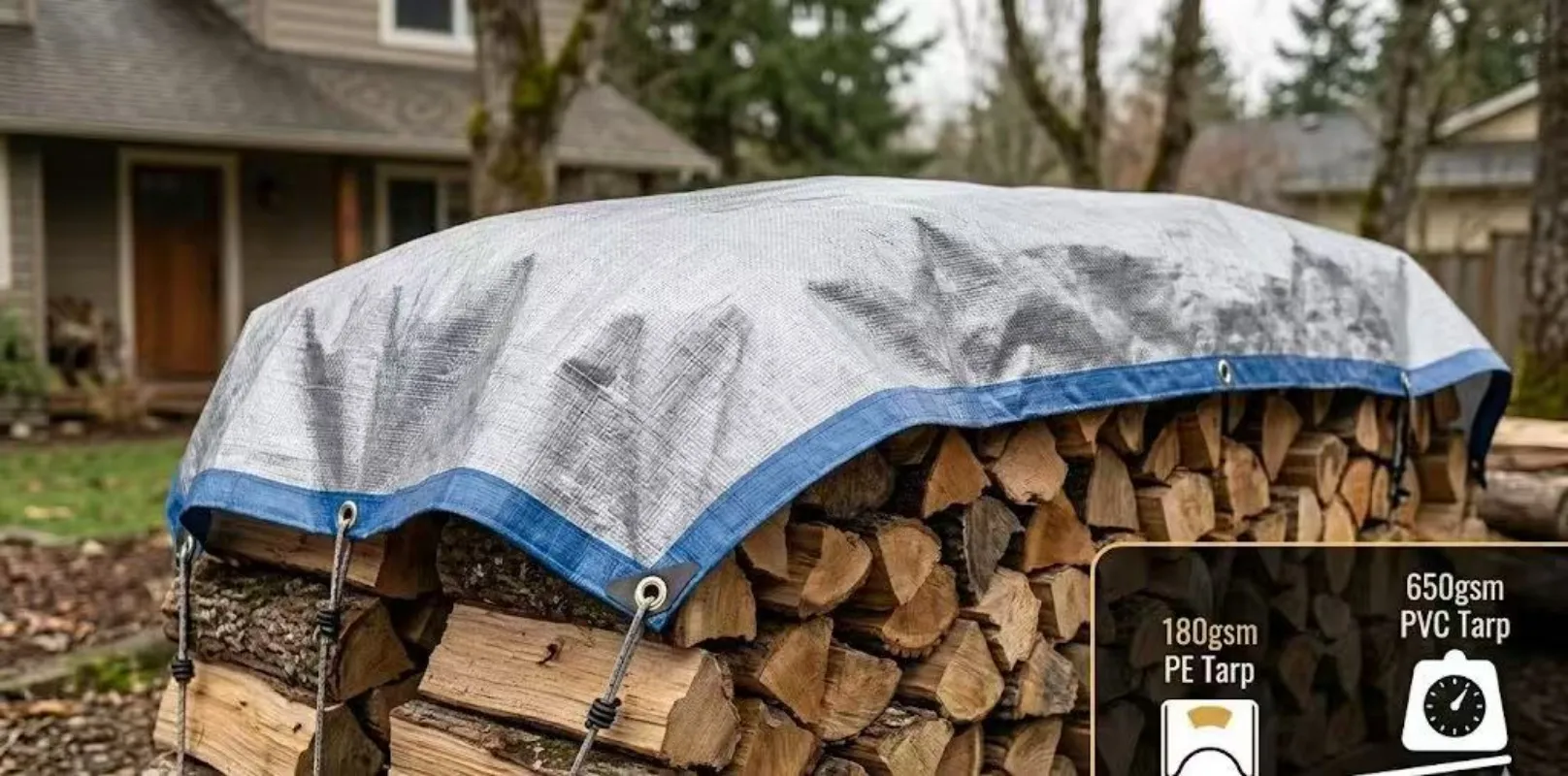
- The Winner: PE Tarpaulin. Our 180gsm heavy-duty PE tarp is perfect here. It’s light enough for one guy to throw over a woodpile, 100% waterproof, and cheap enough that you won't cry if you accidentally spill paint on it. Client Mark from Ohio bought our PE tarp to cover his hay bales. He told us: "It kept the hay bone-dry all winter, and I didn't break my back putting it on."
Scenario B: The Cross-Country Flatbed Trucker
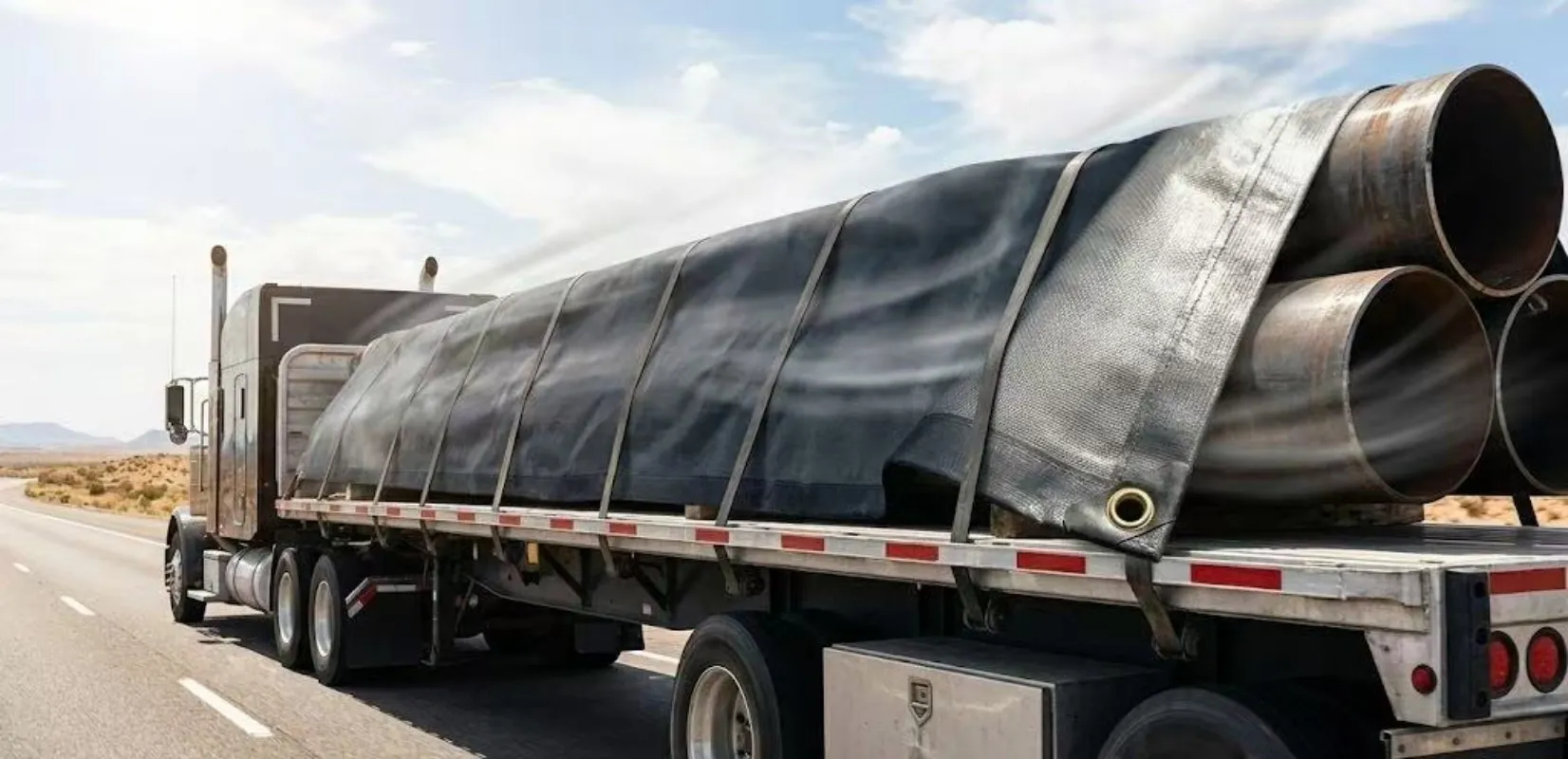
- The Mission: You are strapping down sharp steel pipes or heavy machinery on a flatbed truck, driving 80 mph through blizzards and desert sun for 5 years straight.
- The Mistake: Buying a standard PE tarp. Wind whip at highway speeds acting on sharp metal corners will slice PE like butter eventually.
- The Winner: PVC Tarpaulin. This is where the bouncer shines. A heavy-duty PVC truck tarp won't flap violently in the wind because of its sheer weight. It stretches slightly, hugging the load, and the vinyl coating aggressively resists abrasion. Yes, it costs three times as much, but it lasts ten times as long.
The "How Not to Get Scammed" Checklist
Whether you decide you need a
poly tarp (PE) or a vinyl tarp (PVC), the market is full of shady suppliers cutting corners. Keep this checklist handy:- Don't ignore the GSM (Grams per Square Meter): If a supplier says "Heavy Duty" but won't tell you the GSM, run. For PE, anything under 150gsm is basically a garbage bag. For a good PE tarp, aim for 180gsm - 250gsm. For PVC, you want 500gsm to 800gsm for serious industrial use.
- Check the UV Treatment: A tarp without UV protection is like a vampire—it dies in the sun. If you buy a cheap, untreated tarp, the sun will bake the plastic until it literally crumbles into white dust when you touch it. We bake our UV inhibitors into the raw material, not just spray it on top.
- Look at the Seams, Not Just the Fabric: A 100% waterproof fabric means nothing if the seams are stitched with a needle. Needles make holes. Water loves holes. We strictly use high-frequency heat welding. The seams are melted together, meaning water couldn't get through even if it had a VIP pass.
Stop Guessing. Let's Do the Touch Test.
Look, reading about the difference between PE and PVC is like reading about how a steak tastes. You need to get your hands on it.
I don't expect you to drop thousands of dollars on a bulk order just hoping you made the right call. We dare to put our money where our mouth is.
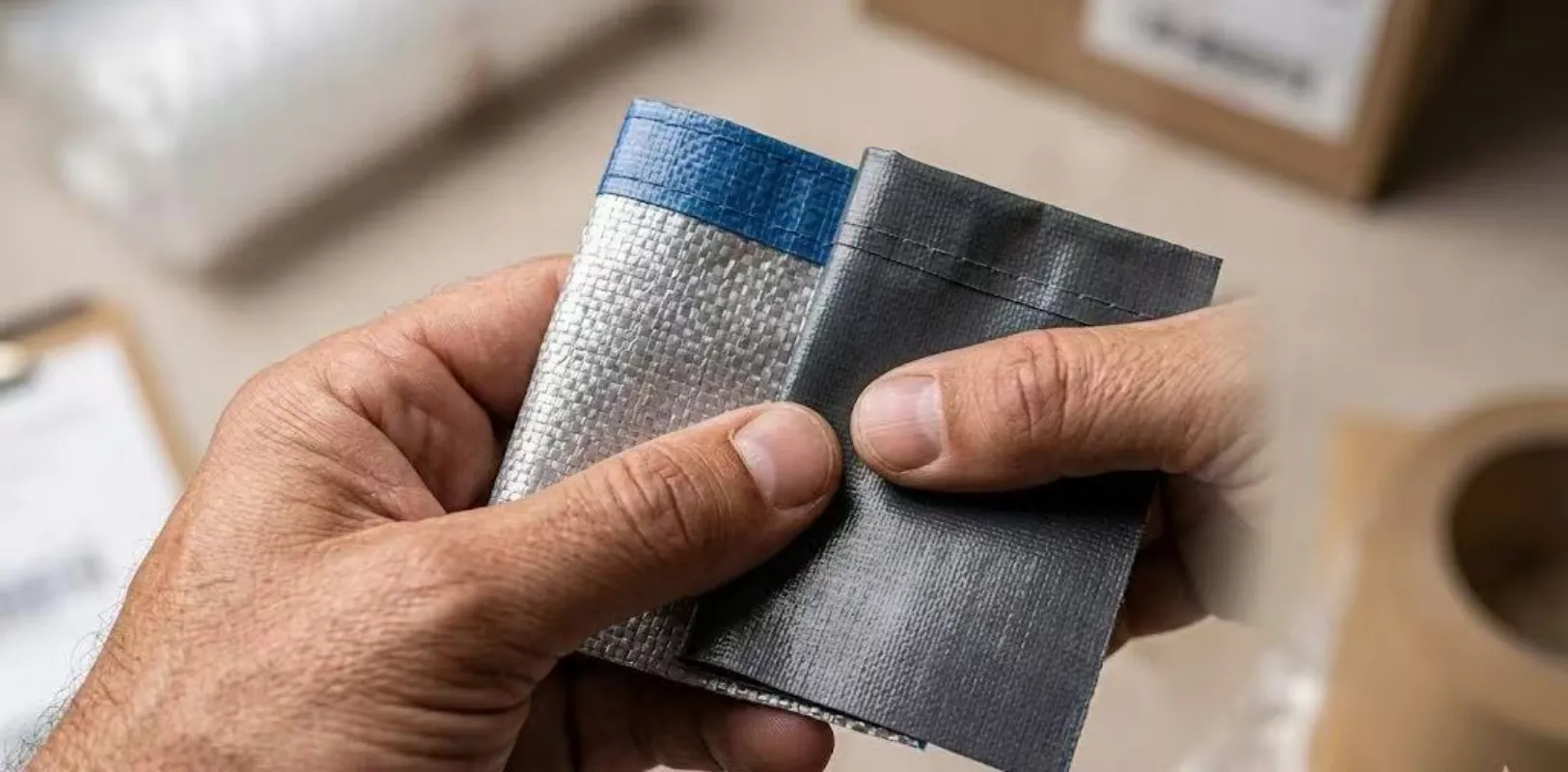
Are you still staring at your screen, wondering which one will survive your specific job? Don't guess. Shoot me a message on WhatsApp with a picture of what you are trying to cover. Not only will I give you the brutally honest truth about which material you need, but I will physically mail you a scrap of our premium PE and our hardcore PVC.
Take them out to your yard. Try to tear them. Drag them on the concrete. Once you feel the difference in your own hands, you'll never buy the wrong tarp again.