
News Construction TarpsOutdoor UseHow to Choose Tarp
2026年4月1日
How to Choose the Right Tarp for Construction Projects (Without Overpaying)
If you’ve ever supplied tarps to construction sites, you’ll notice something quickly: The problem is rarely the spec sheet. It’s what happens after the tarp actually gets used. On paper, a tarp might
If you’ve ever supplied tarps to construction sites, you’ll notice something quickly:
The problem is rarely the spec sheet.
It’s what happens after the tarp actually gets used.
On paper, a tarp might look “heavy duty.”
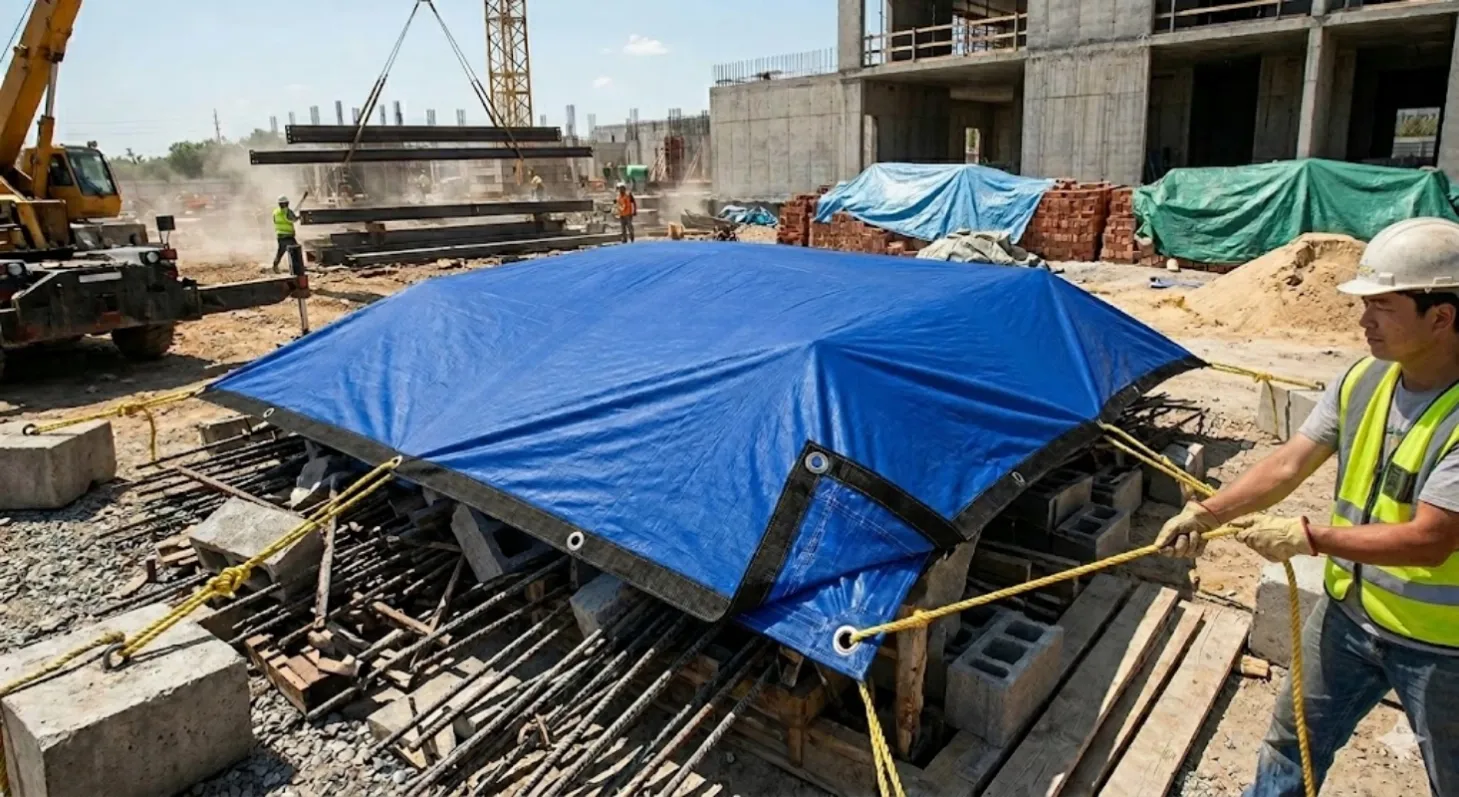
But on-site, it’s dragged across concrete, tightened over steel, exposed to sun all day, and reused again and again.
That’s where many tarps fail — not in theory, but in reality.
And when they fail, your customer doesn’t say:
“Maybe the GSM wasn’t right.”
They say:
👉 “This tarp didn’t last.”
What Makes Construction Use So Demanding
Construction is one of the toughest environments for tarps because it combines everything:
rough surfaces
sharp edges
heavy materials
constant movement
long outdoor exposure
Unlike warehouse use, tarps here are rarely “left alone.”
They are:
pulled over uneven loads
tied down tightly
removed and reused multiple times
This repeated stress is what separates a good tarp from one that just looks good in photos.
Step 1: Stop Looking Only at GSM
One of the most common questions is:
👉 “Should I go 150 GSM or 200 GSM?”
It’s a reasonable question — but not the most important one.
We’ve seen plenty of 200 GSM tarps fail early because:
edges were weak
lamination was inconsistent
eyelets couldn’t handle tension
At the same time, a well-made 150 GSM tarp lasted longer simply because it was built better.
👉 In construction use, structure matters as much as thickness.
Step 2: Pay Attention to Edges and Eyelets
If you want to understand why tarps fail, don’t look at the center.
Look at:
corners
edges
eyelets
That’s where most failures begin.
Typical issues:
eyelets pulling out under tension
edges splitting after repeated tying
corners wearing out first
This is especially common when tarps are used to cover steel or equipment with sharp edges.
👉 Experienced buyers often check finishing details before anything else.
Step 3: Match the Tarp to the Job (Not Just the Spec)
Not all construction use is the same.
For example:
Temporary Covering
bricks, sand, or tools
👉 150 GSM is usually enough
Medium Use
machinery or materials over several days
👉 150–180 GSM works well
Heavy Use
steel structures
long-term outdoor covering
👉 180–250 GSM + reinforced edges
👉 The mistake is using one “standard tarp” for all situations.
Step 4: Don’t Ignore Sunlight
Many buyers focus on durability under weight,
but forget long-term exposure.
In regions like:
Texas
California
Australia
UV exposure becomes the main factor.
Tarps that look fine at first can:
fade
become brittle
crack under light tension
👉 If the tarp stays outdoors for weeks, UV resistance is not optional.
A Real Case
One of our clients in the US was supplying tarps to contractors.
They initially chose a lower-cost 120 GSM option.
At first, everything seemed fine.
But after a few weeks:
complaints started
tarps tore at edges
customers requested replacements
They switched to 180 GSM with better reinforcement.
Result:
fewer complaints
lower replacement cost
better repeat orders
👉 The product cost increased slightly, but profit improved.
What Buyers Often Overlook
From experience, most issues come from:
focusing too much on price
ignoring real usage conditions
assuming all tarps perform the same
In reality, even small differences in construction can lead to big differences in performance.
Final Thoughts
If you’re supplying construction customers,
your goal is not just to offer a tarp —
👉 it’s to offer something that works under real conditions.
Because once a tarp fails on-site,
it’s not just a product issue —
👉 it becomes your problem as a supplier.
https://www.tarpmanufacture.com/products/construction-heavy-duty-tarps-site-cover
👉 heavy duty poly tarp → /heavy-duty-poly-tarp
👉 tear resistant tarps → /tear-resistant-heavy-duty-tarps
👉 construction tarps → /construction-heavy-duty-tarps
If your customers are using tarps in construction environments,
tell us what they’re covering and how long they use it.
We can recommend a more practical specification —
based on real use, not just numbers.