
News Waterproof TarpsUV Resistant TarpsOutdoor Use
2026年3月25日
Emergency Tarps: What Actually Works in Real Situations
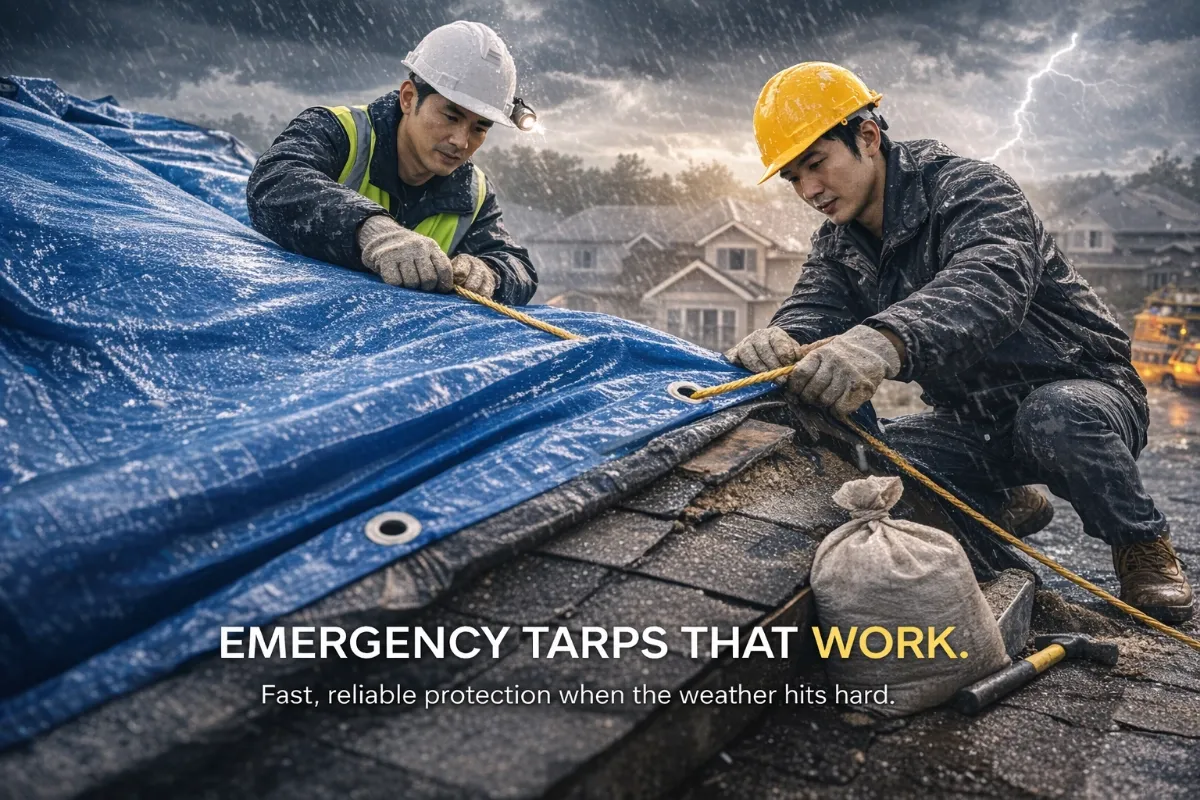
Emergency tarps are very different from regular tarps. When people search for them, it’s usually not for planning — it’s because something has already happened. A damaged roof, a sudden storm, a job
Emergency tarps are very different from regular tarps.
When people search for them, it’s usually not for planning —
it’s because something has already happened.
A damaged roof, a sudden storm, a job site exposed overnight…
in these situations, nobody is comparing specs line by line.
They just need something that works — quickly, reliably, and without surprises.
And that’s where a lot of tarps fall short.
Typical Use (Where Emergency Tarps Are Actually Used)
From what we’ve seen, emergency tarps are mostly used in:
- covering damaged roofs after storms
- temporary protection for unfinished buildings
- quick shelter setups
- protecting equipment or materials exposed suddenly
These are not “ideal conditions.”
They’re often messy, rushed, and done under pressure.
Which means the tarp needs to perform without perfect installation.
What Matters Most in Real Situations
In emergency use, priorities are very different from normal purchasing.
It usually comes down to three things:
1. Fast Deployment
People don’t have time to struggle with a tarp.
If it’s too stiff, too heavy, or difficult to unfold,
it slows everything down — especially in bad weather.
A tarp that can be opened, positioned, and fixed quickly
is far more valuable than one that just looks stronger on paper.
2. Reliable Waterproof Performance
In emergency scenarios, water protection isn’t optional —
it’s the whole point.
Even small leaks can cause bigger damage, especially for:
- interiors
- stored materials
- unfinished structures
The problem is, some tarps are “technically waterproof,”
but don’t hold up well when:
- water sits on them for hours
- edges aren’t perfectly sealed
- installation isn’t ideal
👉 Real waterproof performance means it works even when conditions aren’t perfect.
3. Easy Handling
This is something many buyers overlook.
Emergency tarps are often handled by:
- contractors
- workers on-site
- sometimes even homeowners
If the tarp is too heavy or too bulky:
- it’s harder to position
- harder to secure
- more likely to be installed poorly
So there’s always a balance between strength and usability.
What People Often Get Wrong
From a sourcing perspective, there are two common mistakes:
Too Heavy
Heavier tarps sound like a safe choice.
But in emergency use, they can become a problem:
- difficult to carry and position
- slow to install in urgent situations
- not practical for quick jobs
Too Light
On the other hand, going too light creates a different issue:
- tears under tension
- doesn’t hold up in wind
- fails after short use
👉 And in emergency situations, failure usually means bigger losses.
A Real Scenario
After a storm in one of our client’s markets, contractors needed tarps immediately for temporary roof covering.
At first, many chose lighter tarps because they were cheaper and easier to handle.
But within days:
- some tarps started leaking
- others tore at the edges under wind
They quickly switched to mid-weight tarps with better reinforcement.
Not the heaviest option —
but something that could be installed quickly and still hold up.
👉 That balance made the difference.
Final Thoughts
Emergency tarps are not about having the highest spec on paper.
They’re about working under real conditions:
- fast installation
- imperfect setup
- continuous exposure
For distributors and importers, this category is interesting because demand is often urgent and recurring.
But it also means:
👉 choosing the wrong product leads to fast complaints
👉 choosing the right one builds trust quickly
In many cases, a tarp that is “easy to use and reliable enough”
performs better in the market than one that is simply “the strongest.”
If your customers deal with emergency repairs or temporary protection,
tell us how the tarps are actually used — roof size, duration, conditions.
We can suggest a more practical option based on real situations,
not just product specs.